WHAT IT IS
A shark or skate eggcase
In skates the case protects the embryo for about 5 months to over a year, depending on species. Then a fully formed young skate swims out and the empty case can drift ashore.
How they growBEACHCOMBING WITH A PURPOSE
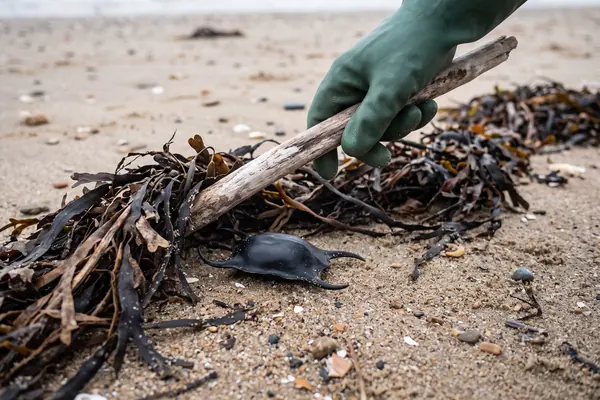
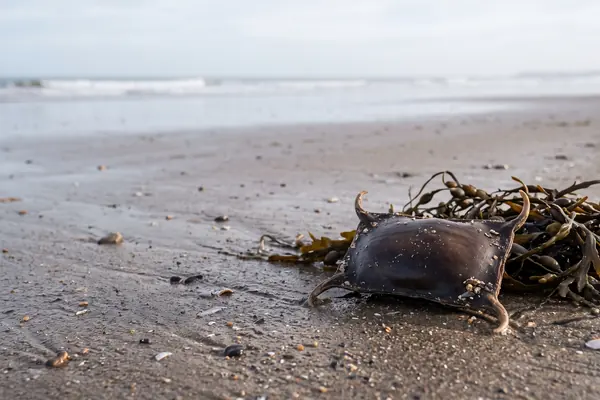
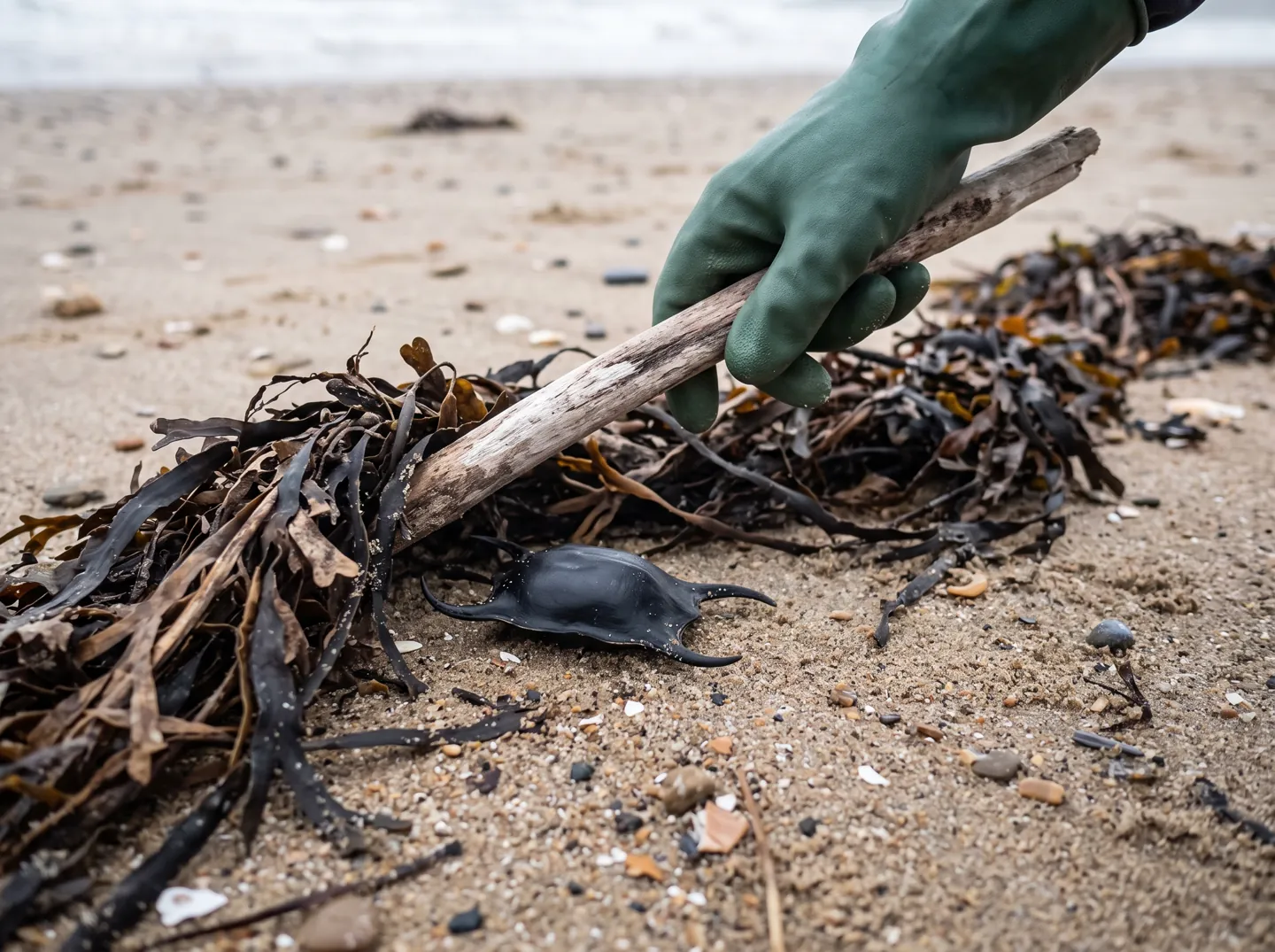
That black purse in the seaweed once held a baby ray.
Some sharks, and all true skates, lay eggs inside a tough leathery case. Once empty, the cases wash ashore, and each species leaves a slightly different shape. In the UK many skates are called rays, which is why it is a ray's purse you are most likely to find.
LOOK, SOAK then name it
THE SHORT ANSWER
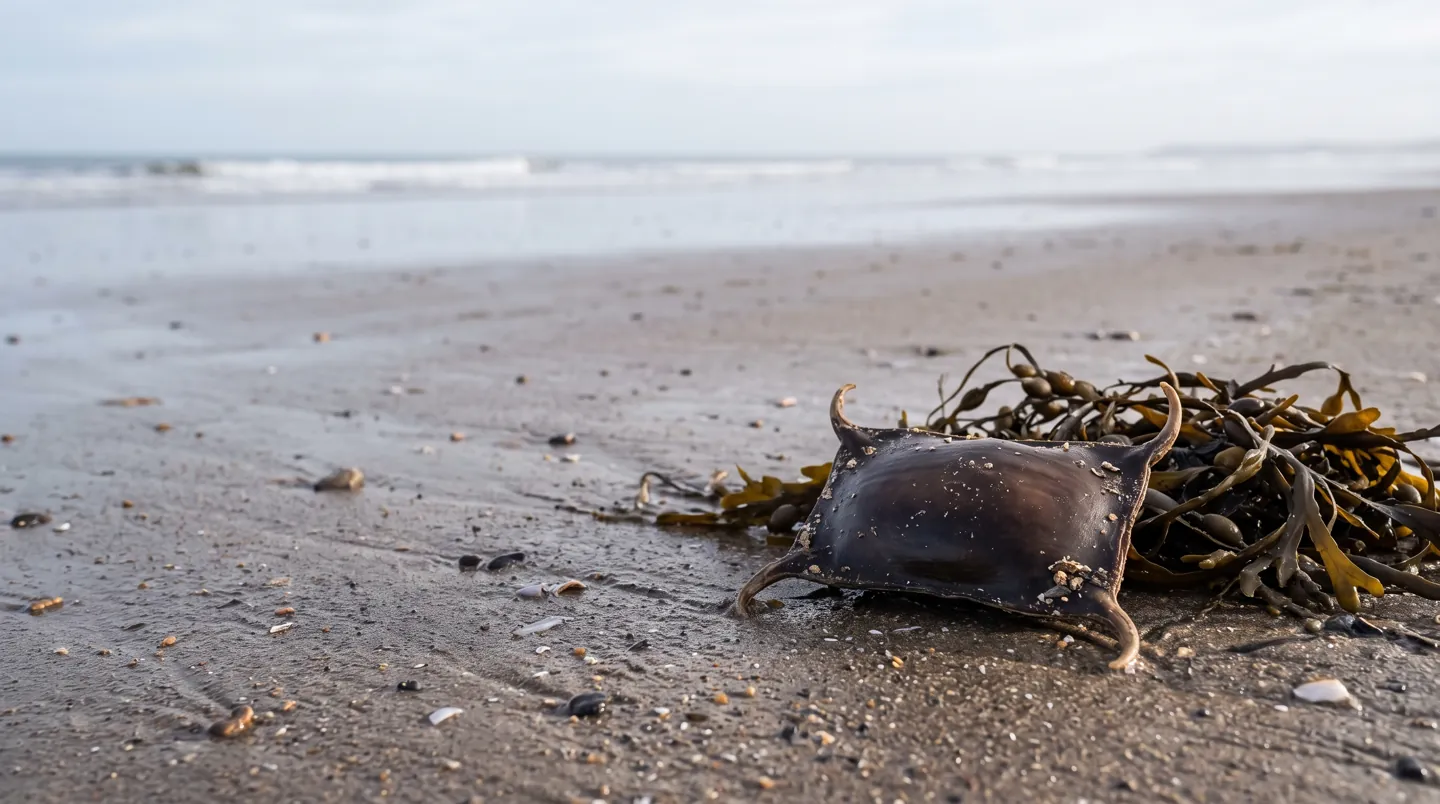
A mermaid's purse is an eggcase.
Its shape and size tell you who laid it.
WHAT IT IS
In skates the case protects the embryo for about 5 months to over a year, depending on species. Then a fully formed young skate swims out and the empty case can drift ashore.
How they growWHERE TO LOOK
Search the strandline where seaweed piles up. Dry cases are light, so also check the back of the beach and dune grasses. After a storm is prime time.
How to huntHOW TO NAME IT
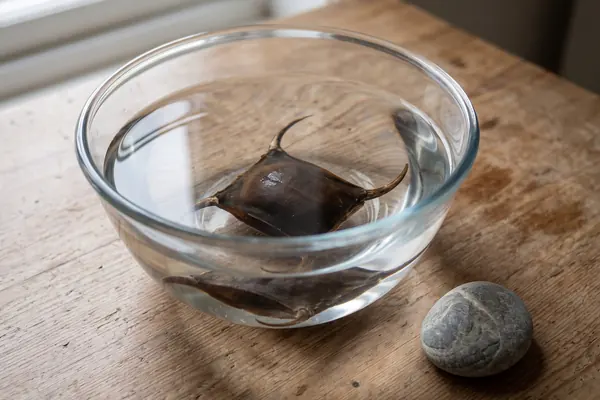
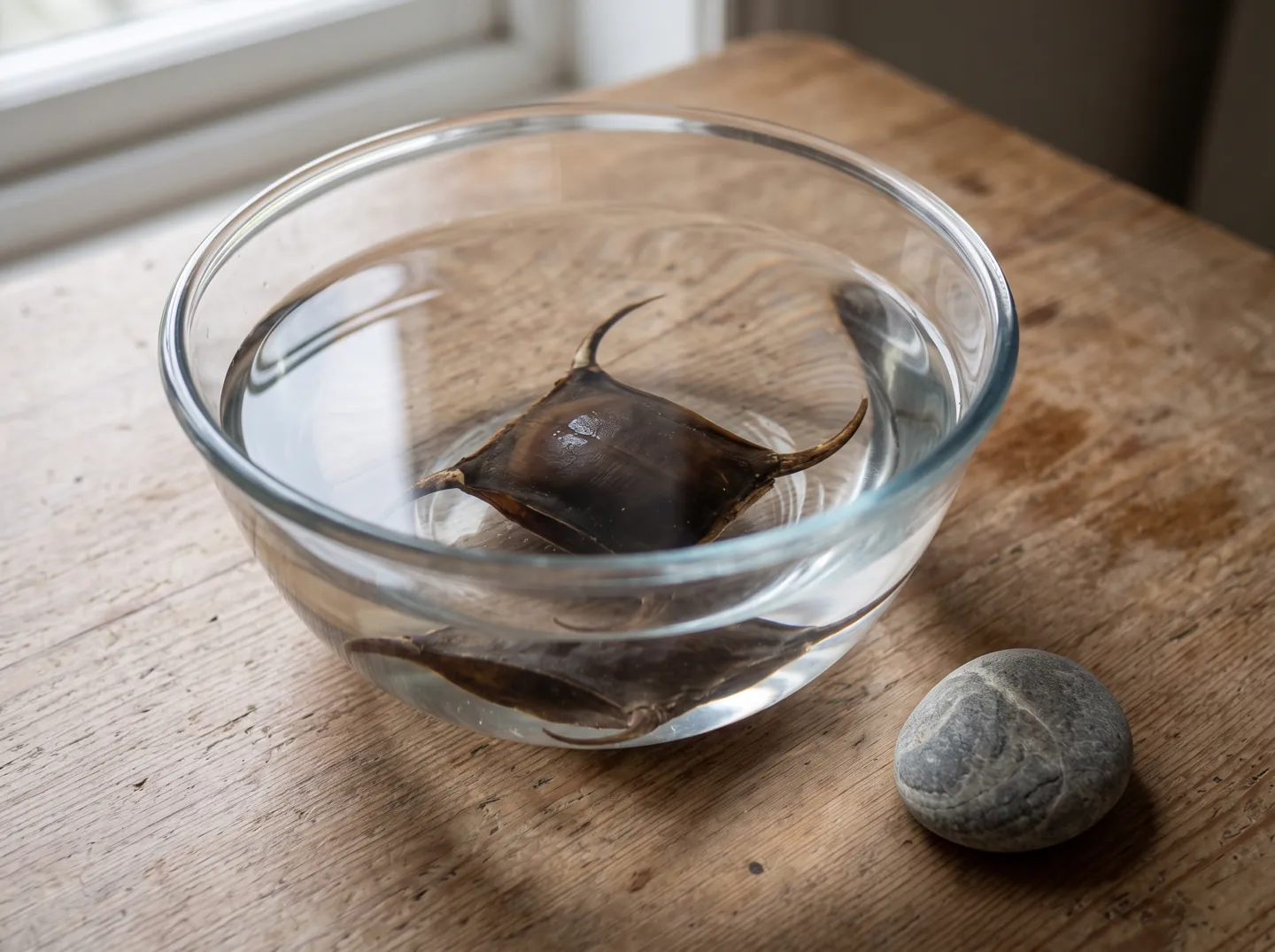
A dry case shrinks and twists. Soak it in fresh water for 1 to 2 hours, or about 24 hours for big ones, then compare size, horns and keels with an ID guide.
Compare fiveFIVE YOU MIGHT FIND
Pick a species to see its eggcase size, the features to look for and where it turns up. The bar shows how often it appears in UK and Irish records.
Sizes are for the capsule without horns, as given by the Shark Trust. Size varies, so a centimetre or so either way is normal.
TWO NUMBERS WORTH KNOWING
One figure on how much the public has found,
one on which species dominate.
430,000+
Eggcases recorded around the British Isles, 2003 to 2023
The Great Eggcase Hunt began in 2003 with 127 eggcases from around 50 people. By August 2023 it held over 430,000 from the British Isles, 87% verified by photo, specimen or expert.
UK RECORDS · SHARK TRUST
≈ 55%
Share of UK and Irish eggcases from just two species
Nearly 55% of records come from the thornback ray and the smallspotted catshark. Around 30 egg-laying species live around the British Isles, but many stay offshore.
TWO SPECIES · SHARK TRUST
January to April brings the most finds: winter storms dislodge more eggcases, and it is the season for long beach walks, according to the Shark Trust's 20-year report.
FOUR STEPS ON THE BEACH
You need no kit beyond a phone and a bag. The Shark Trust suggests a timed 20-minute strandline walk if you want your hunt to count as simple science.
Check tide times, tell someone where you are going, keep away from the base of cliffs and use a stick to rummage in seaweed.
If an embryo is inside, put the case back in the sea or a deep rockpool and weigh down the horns so it does not wash ashore again.
Rehydrate it in fresh water, then photograph it beside a scale such as a ruler or a 2p coin. Ignore any seaweed or animals attached.
Send the photo, place and date through the Shark Trust's online form or app. A photo lets them verify the record for research.
THE BIGGEST PURSE
The flapper skate was once lumped with the blue skate as the 'common skate' until 2010, when they were found to be two species. NatureScot says adult females can reach up to 285 cm, take over 10 years to mature and lay eggs that stay on the seabed for over a year.
Commercial landing of flapper and blue skate became illegal in Scotland in 2009, and the Loch Sunart to the Sound of Jura Marine Protected Area was designated in 2015 to protect a resident population. Babies hatch at around 28 cm long.
Questions
It is a traditional name for the empty eggcases of sharks, skates and rays that wash up on beaches. The Shark Trust uses both names; scientists and recorders call them eggcases.
All true skates lay eggs in eggcases. In the UK many skate species are called rays in their common names, such as the thornback ray, which is why the cases you find are often labelled 'ray'.
Eggcases wash up all year round, but the Shark Trust's records peak from January to April, and the days after stormy weather are especially good because lots of seaweed is thrown up.
Only if you are certain it is empty. The Shark Trust says empty cases do not break down or provide habitat, and removing one prevents double counting. Never take live animals home.
No. The Shark Trust advises against using colour, because cases from the same species can be golden, yellow, green, brown, black or even see-through. Use size, shape, horns and keels instead.
Sources
ABOUT THIS NAME
doodlerays.com is part of the DoodleSale portfolio. It isn't in an auction right now, but you can ask about leasing it.